
How to Do the Impossible: Grow Core Business and Be Future Ready

We believe it is possible to be both future ready and grow the core business at the same time if there is capacity to adapt.
It is possible to be both future ready and grow the core business at the same time if there is capacity to adapt
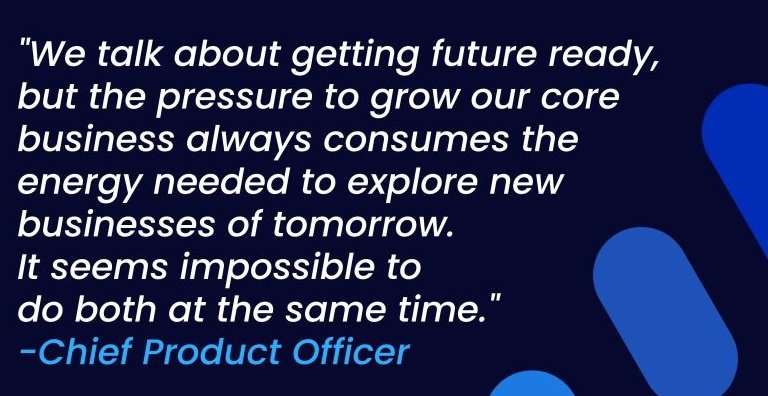
How do we do both has become a fundamental, timeless, and universal question for businesses, affecting entrepreneurs as much as the largest corporations, going back hundreds of years.
The question is really – how do we spend our time and money to optimize our current and future return?
Imbalance is the answer, but what does imbalance really mean? To start, the tension between current and future return is dynamic and never balanced. Further, it is highly situational based on personalities, competition, and many other variables that change often.
Maybe there are occasions when the core business should receive most of the funding, and maybe there are occasions when the new business of tomorrow seems more promising and should receive more investment. One thing we do know is that it’s nearly impossible to answer the question correctly in real time. Even with some analysis, hindsight may only help us arrive at what the wrong answer was at a particular point in the past.
Some might argue that the answer should be “balanced,” but what they’re really saying is that how we spend our time and money should adhere to a particular model, like 70% to core, 20% to adjacent, and 10% to transformational initiatives. However, the suggestion here is to embrace the imbalance, recognize that there’s a natural tension there, and be prepared for change. After all, even those theoretical models are meant to be adjusted as the variables change.
A company pursuing adaptability would think about this problem differently
A company pursuing adaptability would think about this problem differently. First, they would be prepared to answer this question by considering multiple possible futures, running what-if scenarios, and planning adjustments based on the more probable results. In this case, roughly right is better than precisely wrong.
Second, they would prioritize systems to improve their speed of decision making, so that when variables change, they can quickly adjust the tension between these two, realizing that one future has come about. As they embrace the change and analyze their portfolio in the light of the new future, they should seize the moment to identify new gaps and new opportunities.
Third, their people and their ecosystem partners should participate in the decision to adjust because the company empowers those closest to the problem to contribute to solving it. Empowering participation across the ecosystem in moments of change deepens relationships and offers new possibilities for growth.
There is a better way. Companies we’ve seen tend to be more successful when they intentionally implement adaptive leadership, pursue faster decision-making to embrace the change, and empower their people and ecosystem partners to make decisions that adjust this tension as quickly as possible.