
Survey Says: You don’t have a Strategy Problem. You Have an Execution Problem.
Adaptivity’s Adapt to Win Strategy Deployment & Execution Survey points to a clear and consequential pattern: many organizations struggle with building the discipline required to deploy, execute, measure, and adapt strategy effectively.
Key Findings
We’ll spare you the detailed response data, but to summarize, the results indicate that many responding organizations do not deploy their strategic objectives with enough clarity to guide employees’ day-to-day decisions. Employees often lack a clear understanding of leadership’s strategic intent, the most important priorities for their work focus, and clarity in the outcomes they are expected to deliver.
The execution gap is even more pronounced. Even when companies successfully deploy strategic objectives, many do not monitor team progress against those objectives consistently. Fewer still intervene quickly and effectively when projects, teams, or initiatives begin to deviate from desired outcomes.
Without this connection, strategy remains a leadership artifact rather than an operating system for the organization.
Why the Gap Persists
The poor track record of strategy realization is well documented: many strategic initiatives fail, and many companies do not fully realize their stated strategic objectives. The survey results suggest that these failures are not caused by misguided objectives or insufficient ambition as much as poorly developed foundational strategy capabilities. More often, failure to realize strategy reflects breakdowns in the foundational practices required to translate strategy into day-to-day action.
What the Survey Questions Reveal
Root Causes Behind the Symptoms
The framework matters, but it cannot compensate for missing fundamentals.
Why OKRs Alone Are Not Enough
The survey results also underscore an important point: adopting a strategy framework does not automatically create strategy execution capability. Organizations using OKRs can still struggle if objectives are unclear, measures are weak, alignment is poor, accountability is diffuse, and progress tracking and interventions are weak.
The same capabilities underly success for organizations using methodologies other than OKRs, including Hoshin Kanri, OGSM, V2MOM, MBOs, and other methods. The framework matters, but it cannot compensate for missing fundamentals. Strategy realization depends on the organization’s ability to translate intent into measurable objectives, align work across boundaries, track progress frequently, intervene when performance drifts, and adapt as conditions change.
When respondents were asked, “What three things hold your organization back from being great at strategy realization?” their answers were revealing. Many responses identified symptoms whose root causes point back to weaknesses in the fundamentals of strategy deployment and execution. Improving strategy realization requires more than setting better goals. It requires a management system that makes strategy visible, measurable, aligned, accountable, and adaptable.
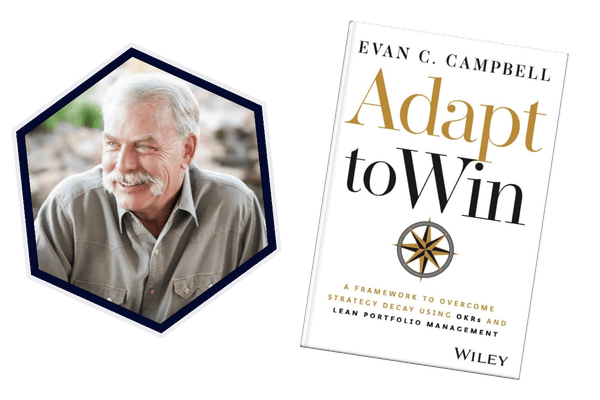
Go Deeper on Strategy Execution
Explore the practices that help organizations realize strategic objectives and build strategic adaptability by reading Adapt to Win: A Framework to Overcome Strategy Decay Using OKRs and Lean Portfolio Management by Evan Campbell.